Recycling and Sustainability for Landscaping Hackney
 Landscaping Hackney is built around a practical commitment to reuse, reduce, and recycle wherever possible. From garden clearances to regular maintenance, our landscaping services are planned with sustainability in mind, so green waste and non-organic materials are handled responsibly. We aim to support a cleaner borough by setting a clear recycling percentage target for recovered materials, with the goal of diverting at least 85% of suitable waste away from landfill through sorting, reuse, composting, and specialist recycling routes. That approach helps ensure that work carried out by a landscaping Hackney team can have a lighter footprint while still delivering high-quality results.
One of the most important parts of our process is the separation of waste at source. In line with the way many boroughs encourage residents and businesses to manage materials, we keep green waste, timber, soil, plastics, metals, and mixed debris as distinct as possible. This makes it easier to send items to the right recovery stream and supports the wider London approach to waste separation. Grass cuttings, hedge trimmings, and leaves can often be composted or turned into mulch, while clean timber may be recycled or repurposed. By following these methods, landscaping in Hackney becomes more efficient and less wasteful.
 Sustainability also depends on where materials go after they leave site. We work with selected local transfer stations and licensed waste facilities that can process separated loads quickly and safely. Using nearby facilities reduces unnecessary travel, helps keep vehicle mileage down, and improves the traceability of waste streams. For example, soil and hardcore from hard landscaping jobs can be directed to appropriate recovery centres, while green arisings can be sent for composting or biomass use. These local handling routes are an important part of responsible Hackney landscaping recycling practices.
Our approach is not only about disposal; it is also about extending the life of materials. Where suitable, timber offcuts, paving slabs, bricks, planters, and decorative stones may be reclaimed for future use on other projects. This reduces the demand for new materials and supports a circular economy model. In some cases, surplus items are offered to charity partners or community groups that can make use of them in plots, allotments, or public-facing green spaces. Partnerships with charities help keep reusable resources in circulation and strengthen the social value of landscaping work across the area.
We also recognise that sustainability includes the vehicles used to move people and materials. Our low-carbon vans are chosen to reduce emissions across day-to-day operations, especially for shorter urban journeys where efficiency matters. Lower-emission transport supports cleaner air in dense neighbourhoods and helps reduce the environmental impact of frequent site visits. Combined with careful route planning and load optimisation, these vans are an important part of our greener landscaping Hackney services. Even small operational choices can make a meaningful difference over time.
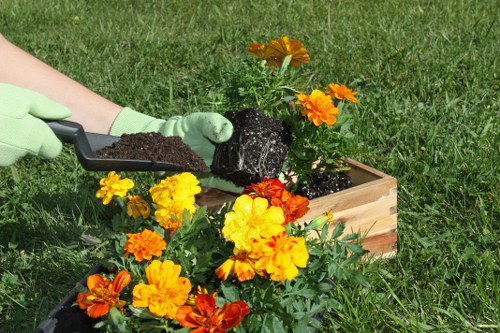 Green waste management is a major priority in local landscaping work. Cuttings from hedges, shrubs, and seasonal pruning are separated from general waste so they can be recovered properly. Soil is screened where possible, and inert materials are handled with care to maximise recycling outcomes. In a borough where space is limited and environmental expectations are high, a disciplined recycling process helps support cleaner streets, better air quality, and a more resilient local environment. That is why our recycling-led landscaping methods are designed to be both practical and transparent.
Recycling and Resource Recovery in Everyday Landscaping
Hackney’s urban setting makes waste separation especially important. Whether work involves a private garden, communal courtyard, or a larger external space, the focus remains on sorting materials into categories that can be reused or recycled. Mixed waste is avoided wherever possible, because it lowers recovery rates and can make processing more difficult. Instead, the team prioritises segregation of organic and inorganic material, helping to meet the local recycling percentage target and keeping more resources in circulation. This careful method is a key part of recycling for landscaping in Hackney.
Where projects involve hard landscaping, the recovery potential can be substantial. Broken concrete, bricks, and other inert materials may be sent to licensed facilities for crushing and reuse as aggregate. Metal fixtures can be extracted and recycled, while plastics and packaging are separated according to the relevant waste stream. For green materials, composting remains one of the best outcomes, turning garden arisings into useful soil improver. These practices reflect a borough-wide commitment to better separation and cleaner recovery, while also supporting more sustainable landscaping services.
 Charitable partnerships add another layer to this work. Good-quality surplus materials may be passed on to organisations that support community growing projects, training initiatives, or environmental programmes. This can include reusable timber, planters, topsoil, or garden edging that would otherwise be discarded. By creating pathways for reuse, Landscaping Hackney helps reduce waste while contributing to local wellbeing. These links with charities are especially valuable in a city environment, where access to affordable materials can support smaller projects and education-based green spaces.
Our sustainability approach is reviewed regularly so that it continues to reflect best practice. We monitor disposal routes, maintain records of waste movements, and assess opportunities to improve recovery performance. Keeping track of what is recycled, reused, or composted helps us stay accountable to our targets and adjust processes where needed. It also reinforces the broader goal of reducing environmental impact across all types of landscaping Hackney work, from routine maintenance to larger transformations.
We believe that greener operations should be practical as well as ambitious. That is why our services combine thoughtful sorting, local transfer stations, charity partnerships, and low-carbon vans into one joined-up system. Each stage contributes to a more responsible way of working, from the first collection of green waste to the final delivery of recovered materials. By staying focused on recycling, reuse, and emissions reduction, landscaping in Hackney can support healthier spaces and a more sustainable borough.
 Ultimately, recycling and sustainability are not separate extras; they are central to how modern landscaping should operate. With a clear recycling percentage target, strong local processing routes, and a commitment to lower-emission transport, we can make everyday landscaping more environmentally responsible. Through selective sorting, charity collaborations, and attention to borough-level waste separation habits, Hackney landscaping recycling becomes part of a wider positive cycle. The result is a service that values resources, respects the local area, and helps green spaces thrive for the long term.